If we have people management then why not machine management?
We had the space race. Then the nuclear arms race and then finally we are in an AI race. Between all these races, one thing has been common: fear and anxiety.
For the context of this article, we are going to stick to the current race we have all found ourselves in- AI. Artifical Intelligence is a funny word to me, precicely because the extent of intelligence with this advanced models is artificial at best. They mimic our intelligence from past and historical records but true genius and creative solutions will always come from the human brain. This would make a lot of people at big tech companies unhappy but they need to sell their product. I dont blame them for wishing a human worker free utopia. What I think will eventually happen is this: We wont need to do grind work. The progress AI has made is similar to my internship days when I started out in my career. I was learning the ropes from better and experienced people with proven results. My output and contribution to the wheel of economy was directly proportional to the experience I gained under someone else’s management.
AI is that intern you can offload all the grind work so you can have space to think, manage and oversee. The next wave of jobs is going to be machine managers alongside people managers. Any rational business won’t leave AI which is prone to quite a few limitations like halluccination, temperature and bias is not going to let it live freely in a workflow without its supervisor. This supervisor exists even now in a lot of teams albeit without a proper title or scope of work. This supervisor is eventually fully transition into a machine manager. The transition of this machine manager is going to be very similar to that of a people manager as the below graph displays in my opinion.
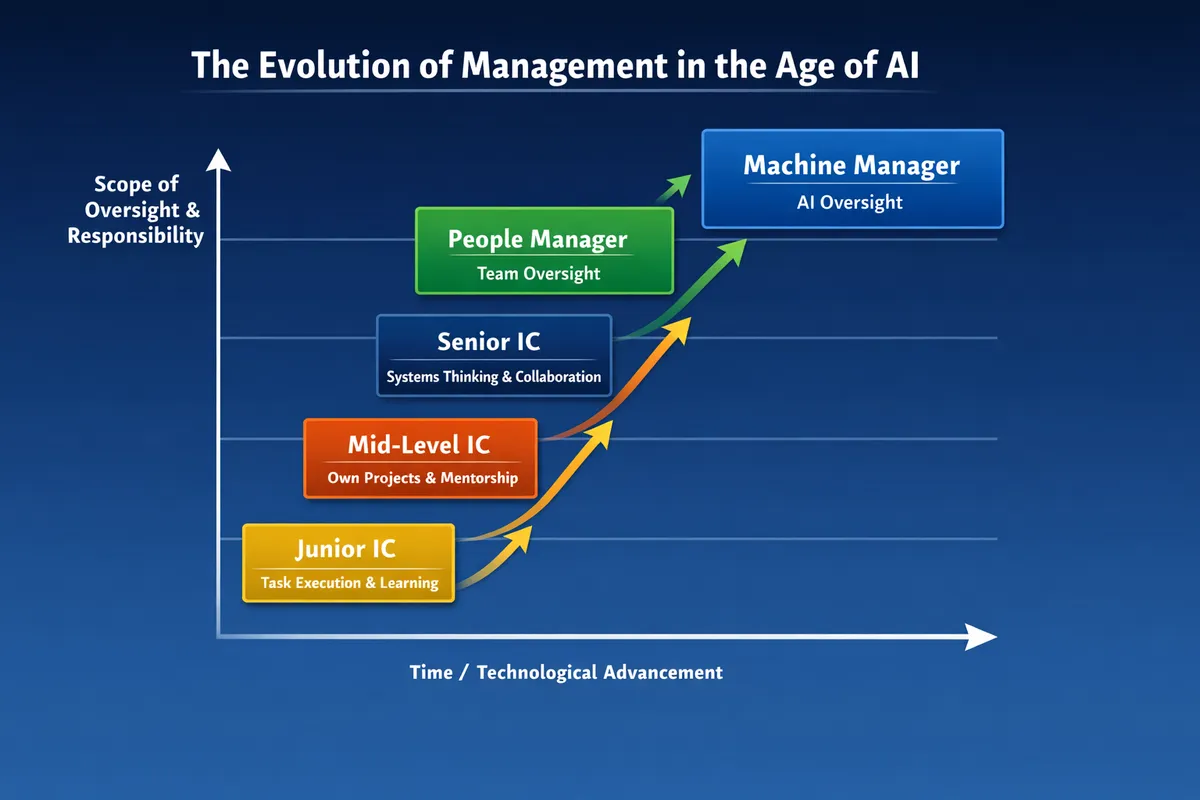 Just like people managers handle interpersonal conflicts, performance reviews, and team morale, machine managers will handle machine trustworthiness, interoperability, and failure recovery. Their job will be to ensure that AI systems—whether they are chatbots, RPA bots, or autonomous agents—function predictably within human workflows. This includes setting ethical guardrails, interpreting ambiguous outputs, and acting as the escalation point when the machine "goes rogue." [ Note: This paragraph was polished with AI].
In many ways, the machine manager is a translator—they bridge the gap between human logic and machine logic. They understand the nuances of both: the imprecision of human intent and the rigidity of machine output. Without such translators, you’ll see more chaos than clarity as AI becomes embedded in business operations. [ Note: This paragraph was polished with AI].
This new role, alongside people managers, is going to be critical to gain desirable returns from AI investments and bets business’ have made across the board. The reason we need machine managers is similar to the reason why we need people managers- operational predictability. This transition for individual contributors in teams could get competitive as AI devours IC roles but the winning formula to stay relevant and become a machine manager is strikingly similar to what made great managers in the past: an understanding of their people. Only now, they’ll need to understand their machines too.